About
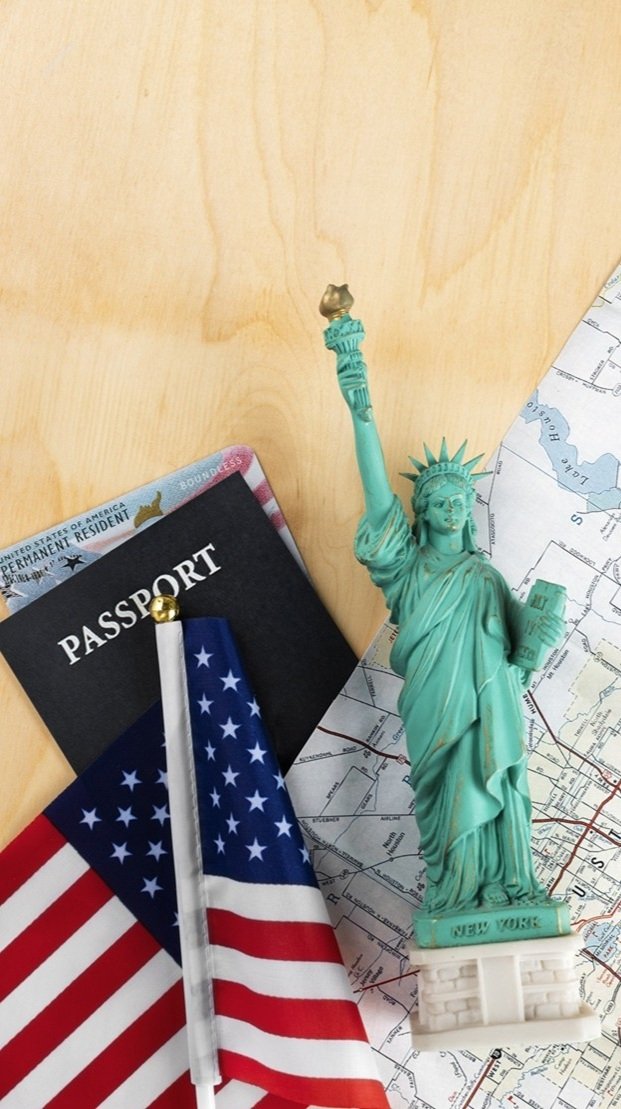
To enter the United States, most non-citizens require a visa unless they are from a Visa Waiver Program (VWP) country. The type of visa depends on the purpose of travel, such as tourism, business, study, or work. U.S. visas are typically issued as a physical sticker in your passport and must be approved before travel.
Common visa types
B-1/B-2 Visitor Visa- Purpose: For short-term tourism (B-2) or business travel (B-1).
- Validity: Usually valid for up to 10 years with multiple entries, depending on nationality.
- Eligibility: Open to applicants worldwide who meet visitor requirements.
- How to apply: File Form DS-160 online, pay the visa fee, and attend an interview at a U.S. Embassy or Consulate.
- Purpose: For full-time academic students enrolled in U.S. institutions.
- Validity: Valid for the duration of the academic program, with the option of practical training.
- Eligibility: Requires acceptance from a SEVP-certified school and proof of financial support.
- How to apply: Obtain Form I-20 from the school, pay the SEVIS fee, and attend a visa interview.
- Purpose: For skilled professionals in specialty occupations.
- Validity: Initially up to 3 years, extendable to 6 years.
- Eligibility: Requires a U.S. employer sponsor and proof of specialized skills/education.
- How to apply: Employer files a petition with USCIS before the applicant applies for the visa.
General application requirements
All U.S. visa applications must be completed online (Form DS-160) and followed by an interview at a U.S. Embassy or Consulate.
- Valid passport: Your passport should be valid for at least six months beyond your stay in the U.S.
- Visa application form: Form DS-160 must be completed online.
- Visa fee payment: Proof of payment is required before scheduling the interview.
- Interview: Most applicants between ages 14–79 must attend an in-person visa interview.
- Supporting documents: May include financial proof, invitation letters, academic documents, or employment details.

VISA
Courses
Business & Management
MBA, Finance, Marketing, Supply Chain, International Business
Engineering & Technology
Computer Science, Mechanical, Civil, Electrical, Data Engineering
Health & Medicine
Nursing, Public Health, Medicine (MD), Pharmacy, Biotechnology
Hospitality & Tourism
Hotel & Resort Management, Event Planning, Travel & Tourism
Arts & Design
Fine Arts, Animation, Film Studies, Graphic Design, Fashion
Science
Physics, Chemistry, Biology, Environmental Science, Mathematics
Law & Education
Juris Doctor (JD), LLM, Education, Special Education, TESOL
Trending Fields
Artificial Intelligence, Cybersecurity, Cloud Computing, Business Analytics, Renewable Energy
Requirements
Requirements depend on the visa type (tourist, student, work, etc.), but here are the common documents and steps usually needed for a U.S. visa application.
Common requirements for any USA Visa
- Valid passport: Your passport must be valid for at least six months beyond your intended stay in the U.S.
- Visa application form (DS-160): Most non-immigrant visas require completing the DS-160 form online.
- Visa fee payment: Pay the non-refundable visa application fee (amount varies by visa type).
- Photo: A recent passport-size photograph that meets U.S. visa photo requirements.
- Visa interview: Most applicants (except some age groups) must schedule and attend an interview at a U.S. Embassy or Consulate.
- Proof of financial support: Documents like bank statements or sponsor details showing you can afford your stay.
- Ties to home country: Evidence of strong ties (job, family, property) to ensure you return after your U.S. visit.
Additional Requirements by Visa Type
| Visa Type | Key Additional Requirements | Reference |
|---|---|---|
| Tourist / Visitor Visa (B1/B2) | Travel itinerary; proof of accommodation; invitation letter (if visiting family/friends); proof of employment or leave approval from employer. |
U.S. Department of State Travel.State.Gov |
| Student Visa (F1 / M1) | Form I-20 issued by a U.S. school; SEVIS fee payment receipt; proof of funds; proof of English proficiency (TOEFL/IELTS/other); transcripts & acceptance letter. |
EducationUSA Study in the USA |
| Work Visa (H1B, L1, O1, etc.) | Approved petition from U.S. Citizenship and Immigration Services (Form I-797); job offer letter; proof of qualifications (degrees, certifications); work experience documents. |
USCIS U.S. Embassy Website |
Cost of Living
- Accommodation : USD 700 – 2,500 / month (shared, on-campus, private rental; varies by city)
- Food & Groceries : USD 250 – 600 / month (home cooking cheaper, dining out more expensive)
- Utilities & Internet : USD 100 – 300 / month (electricity, gas, water, internet)
- Transport : USD 50 – 150 / month (public transport, student discounts, fuel costs if driving)
- Mobile Phone : USD 30 – 80 / month (prepaid or contract plans)
- Health Insurance : USD 100 – 250 / month (required for students, varies by plan)
- Entertainment & Misc. : USD 100 – 400 / month (movies, gym, dining, shopping)
- Annual Estimate : ~USD 22,800 – 36,000 (≈ 1,900–3,000 / month, depending on lifestyle and city)